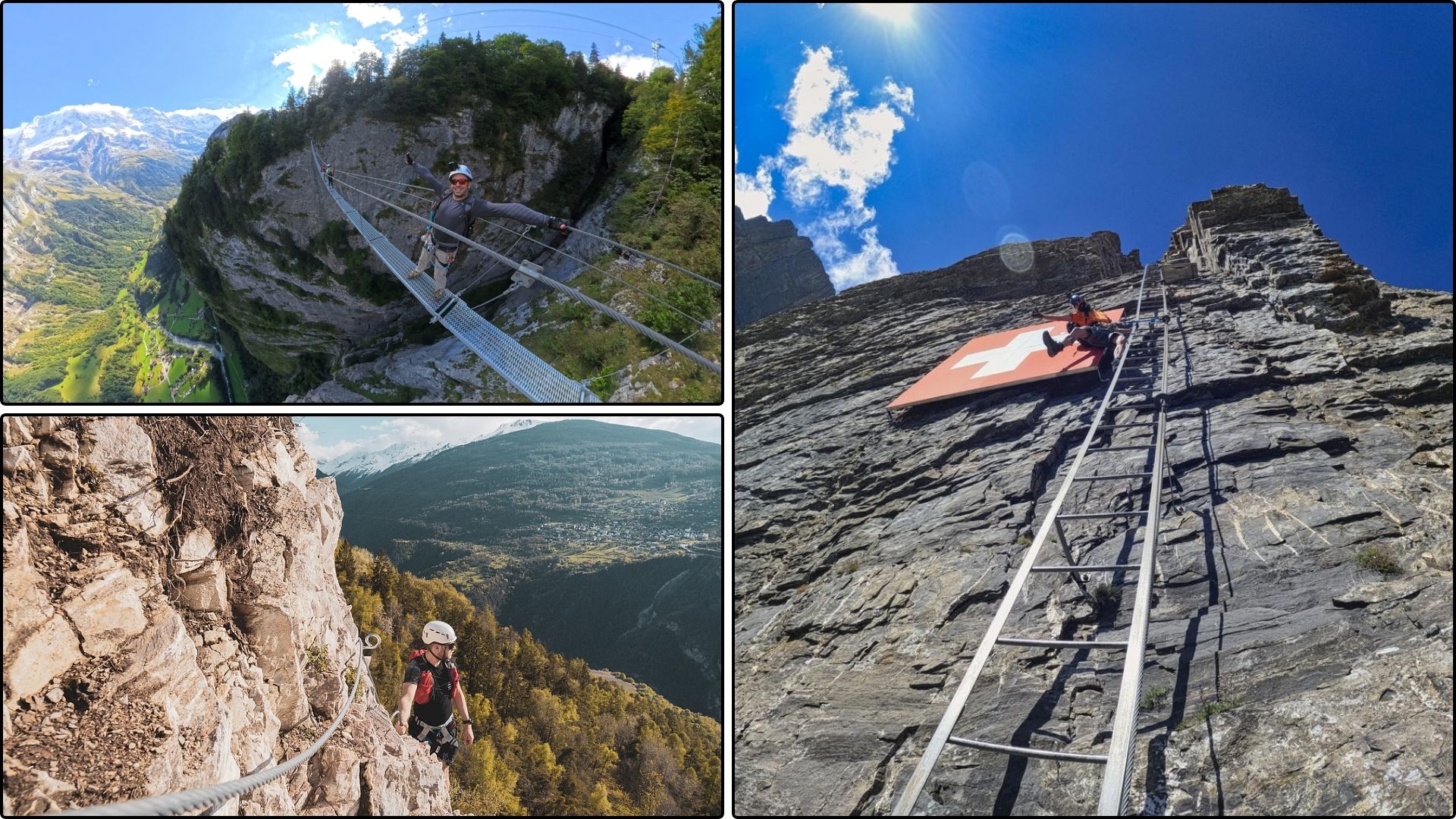
Have you ever wanted to climb a mountain but felt you lacked the technical skills?
Via ferrata routes in Switzerland offer the perfect solution for adventurers.
These protected climbing paths help you move along dramatic cliff faces and mountain peaks. Fixed installations guide you safely upward while you enjoy sweeping Alpine scenery all around.
Switzerland’s mountain regions offer routes that go from simple beginner trails to very demanding climbs. Each path provides a unique way to experience the Swiss Alps.
In this blog, I’ll show you seven incredible routes across Switzerland. You’ll find difficulty ratings, location details, and what makes each climb special for your next adventure.
What is a Via Ferrata in Switzerland?
A via ferrata is a protected climbing route built into rock faces. It uses steel cables, ladders, and metal rungs to help climbers move safely along mountain cliffs.
The term comes from Italian and means “iron path.” These routes allow people to try vertical climbing without advanced rock-climbing skills or any formal mountaineering training.
Switzerland has built many via ferrata routes across its Alpine regions. They connect scenic viewpoints and mountain peaks through otherwise difficult terrain that would be hard to access independently.
Each route includes fixed protection systems anchored into the rock. Climbers attach themselves to these cables using special harnesses and safety equipment throughout their climb up the mountain.
Best Time to Do Via Ferrata
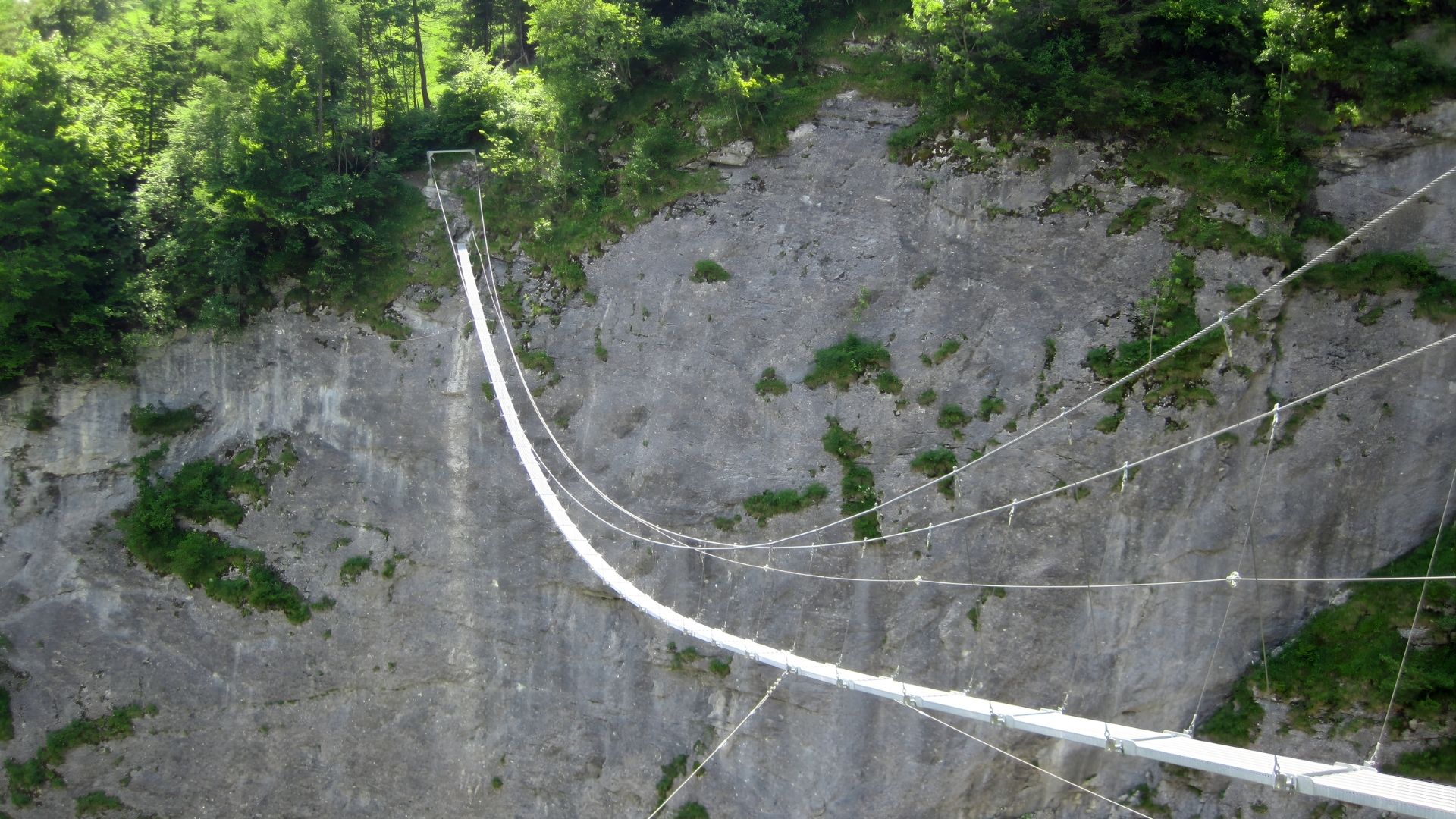
Source: the Severe climber
The best season for via ferrata in Switzerland depends on weather conditions, route accessibility, and your personal comfort level while climbing outdoors.
Summer Months (June to September): Most routes are open and accessible. The weather stays warm and stable, making it ideal for beginners trying via ferrata for the first time.
Spring and Fall (May and October): Some routes remain open, but check conditions first. Temperatures drop lower, and unexpected weather changes can happen more frequently during these months.
Winter (November to April): Most via ferrata routes close due to snow and ice. Only experienced climbers should attempt winter routes with proper gear and local guide support.
Plan your trip between late June and early September for the safest conditions. Always review local mountain forecasts and current route conditions before starting your planned climb.
What Equipment Do You Need for The Via Ferrata?
Via ferrata requires specific safety gear to keep you protected during the climb. Some routes offer rental equipment, but having your own ensures proper fit and comfort.
☐ Via ferrata harness or climbing harness
☐ Via ferrata set with energy absorber and carabiners
☐ Climbing helmet for head protection
☐ Sturdy hiking boots with good ankle support
☐ Gloves to protect hands from cables
☐ Backpack for water and snacks
☐ Weather-appropriate clothing layers
☐ First aid kit and emergency supplies
Always inspect your equipment before starting the climb. Damaged or worn gear should be replaced immediately to ensure your safety on the route.
Top 7 Via Ferrata in Switzerland
Switzerland’s via ferrataoffers some of Europe’s most spectacular routes, with beginner paths and extreme climbs that push even experienced mountaineers across the Alps
1. Eiger Rotstock Via Ferrata
Source: Outdooractive
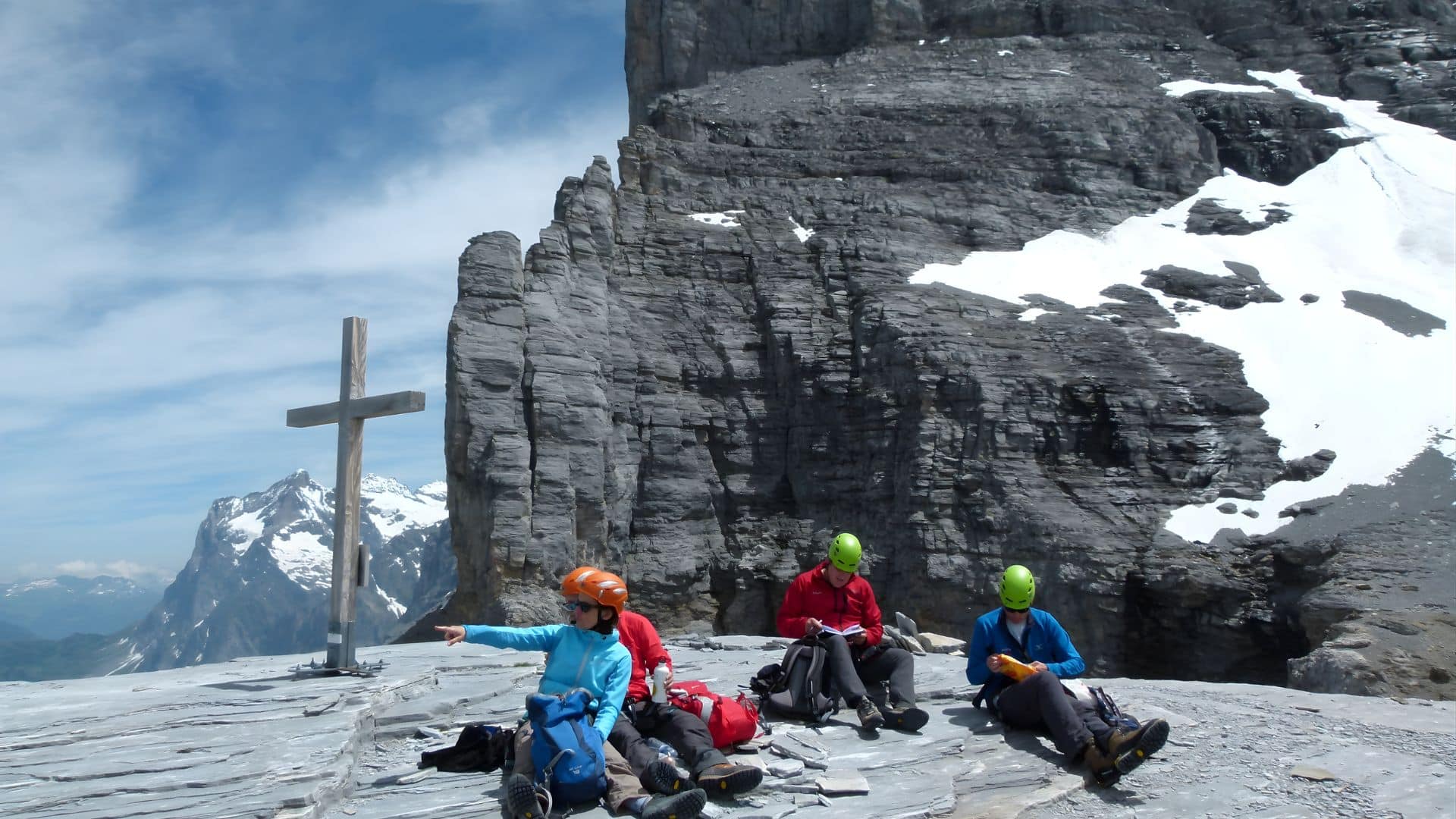
This route takes climbers along the famous Eiger North Face, offering unmatched views of one of the Alps’ most iconic walls, and is moderate in difficulty.
Route Information:
- Difficulty: K2-K3
- Duration: 1.5 to 4 hours
- Length: 260 meters
- Height: 2,662 meters
Getting There: From Eigergletscher station, follow the Eiger Trail for 45 minutes to reach the starting point at approximately 2,400 meters elevation.
The vertical ladder sections at the start test your nerve, while the climb rewards you with a summit cross and scenery that few people ever witness.
2. Mürren Gimmelwald Via Ferrata
Source: Lauterbrunnen
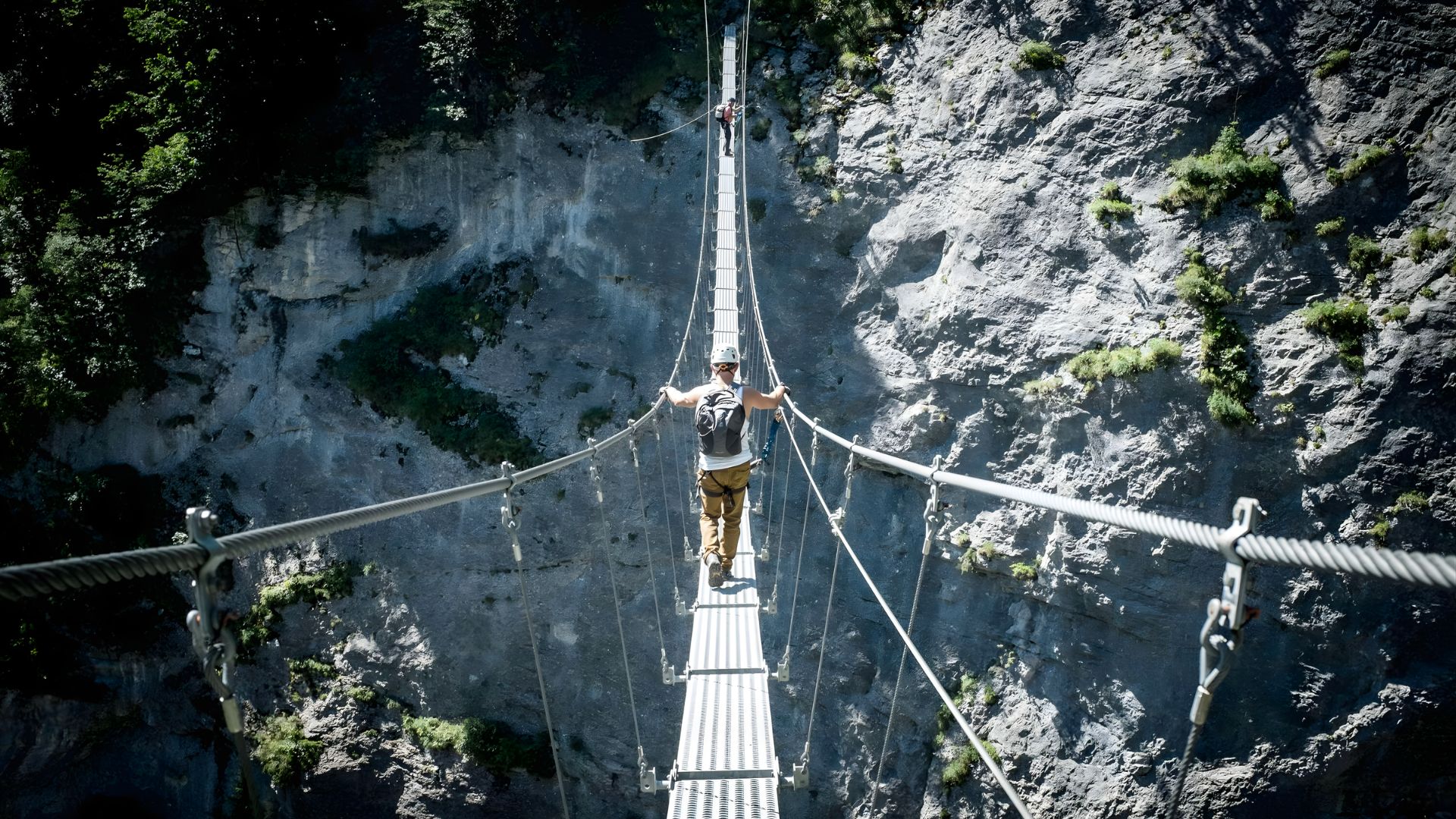
This route descends rather than climbs, taking you from Mürren to Gimmelwald along exposed cliff faces with ladders, bridges, and a zipline option.
Route Information:
- Difficulty: K3
- Duration: 1.5 to 3 hours
- Length: 2.2 kilometers
- Height: 300 meters descent
Getting There: Start at the Sportchalet in Mürren village, accessible by cable car from Stechelberg or train from Lauterbrunnen via the Schilthornbahn.
The highlight includes crossing an 80-meter suspension bridge suspended high above Lauterbrunnen Valley, creating memories that last a lifetime for thrill-seekers and families alike.
3. Daubenhorn Via Ferrata
Source: via-ferrata.de
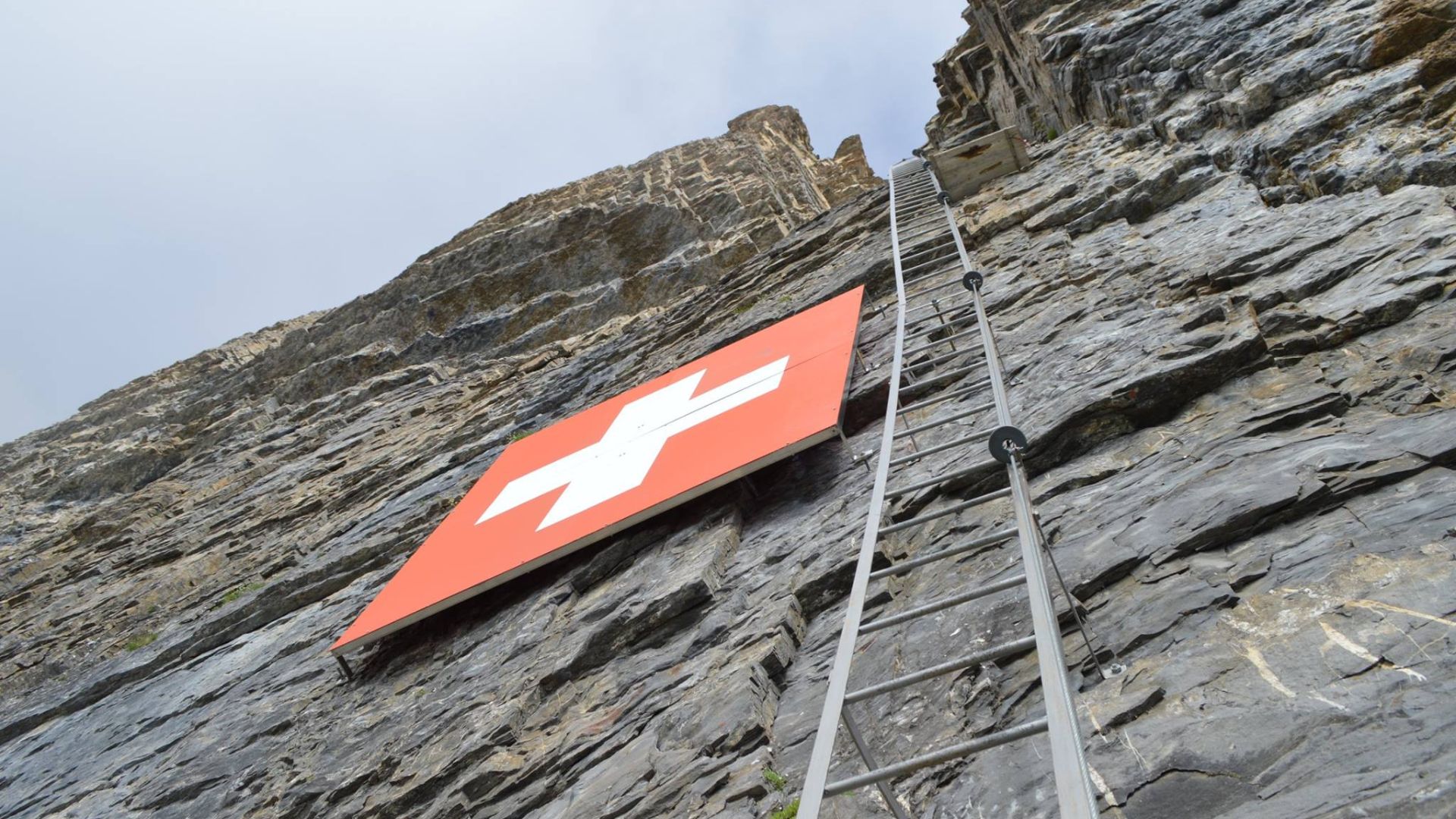
Switzerland’s longest via ferrata climbs nearly 900 meters of steep rock faces, featuring a unique natural cave and extremely demanding technical passages.
Route Information:
- Difficulty: K5-K6 (Extremely Difficult)
- Duration: 5 to 8 hours
- Length: 2,000 meters of cable
- Height: 2,941 meters
Getting There: Take the cable car from Leukerbad to Gemmi Pass at 2,322 meters, then hike 20 minutes down to the route entrance at Untere Schmitte.
Only experienced climbers with excellent stamina and strong nerves should attempt this challenging ascent, which includes 216 meters of ladders through breathtaking Valais mountain scenery.
4. Kandersteg Allmenalp Via Ferrata
Source: Luftseilbahn Kandersteg-Allmenalp
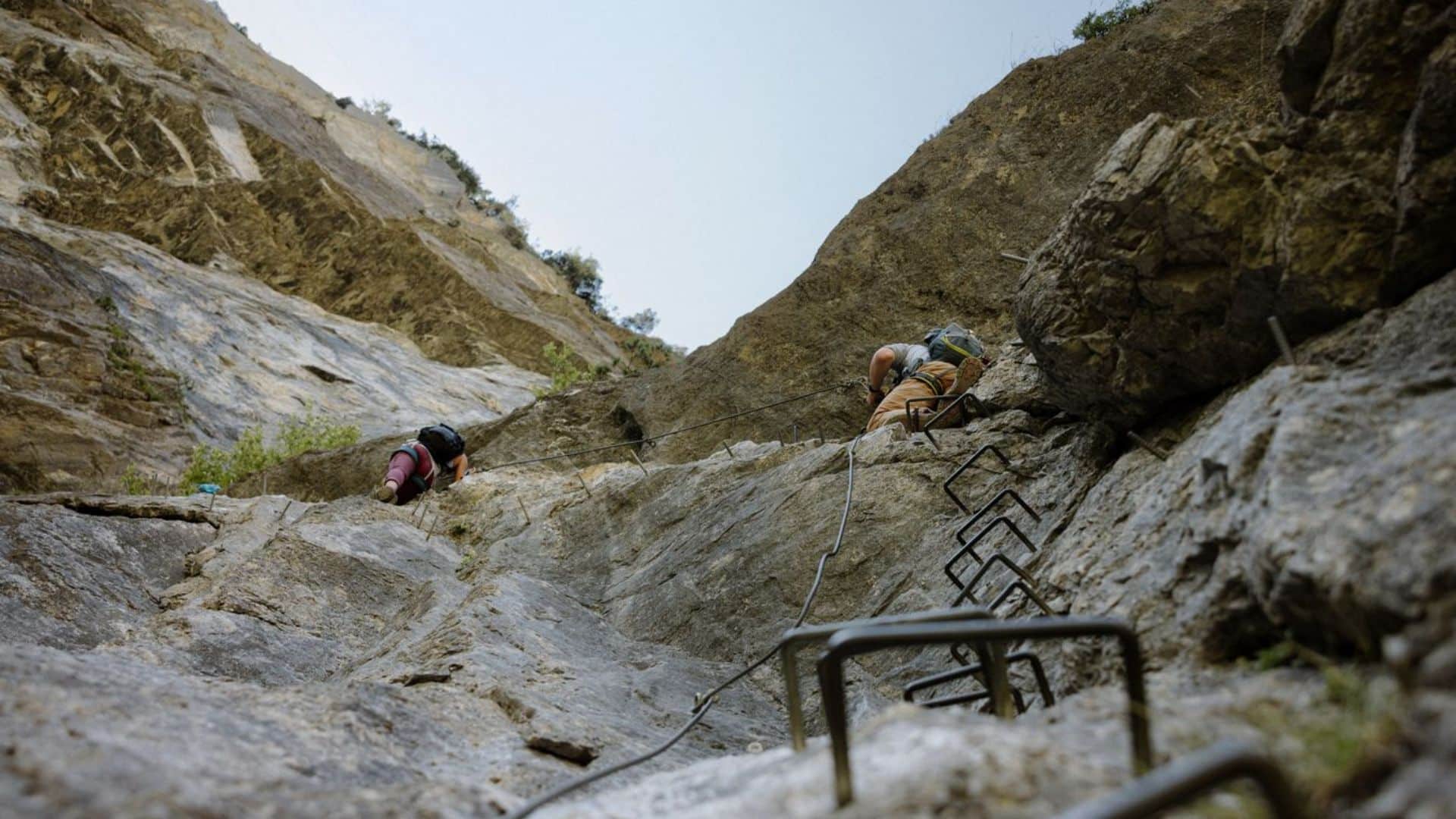
This popular route climbs beside four waterfalls with unique features, including a twisted ladder, three-rope bridges, and an optional 40-meter zipline.
Route Information:
- Difficulty: K4 (with K4+ variant)
- Duration: 2.5 to 4 hours
- Length: 350 meters
- Height: 1,600 meters
Getting There: Walk 15 minutes from Kandersteg railway station or Allmenalp cable car valley station, following signs to the Allmibach stream where the route begins.
The route features a spectacular, twisted 180-degree ladder beneath an overhanging roof and continuous waterfall views, making it one of Switzerland’s most photographed climbs.
5. Pinut Via Ferrata
Source: Flims Laax
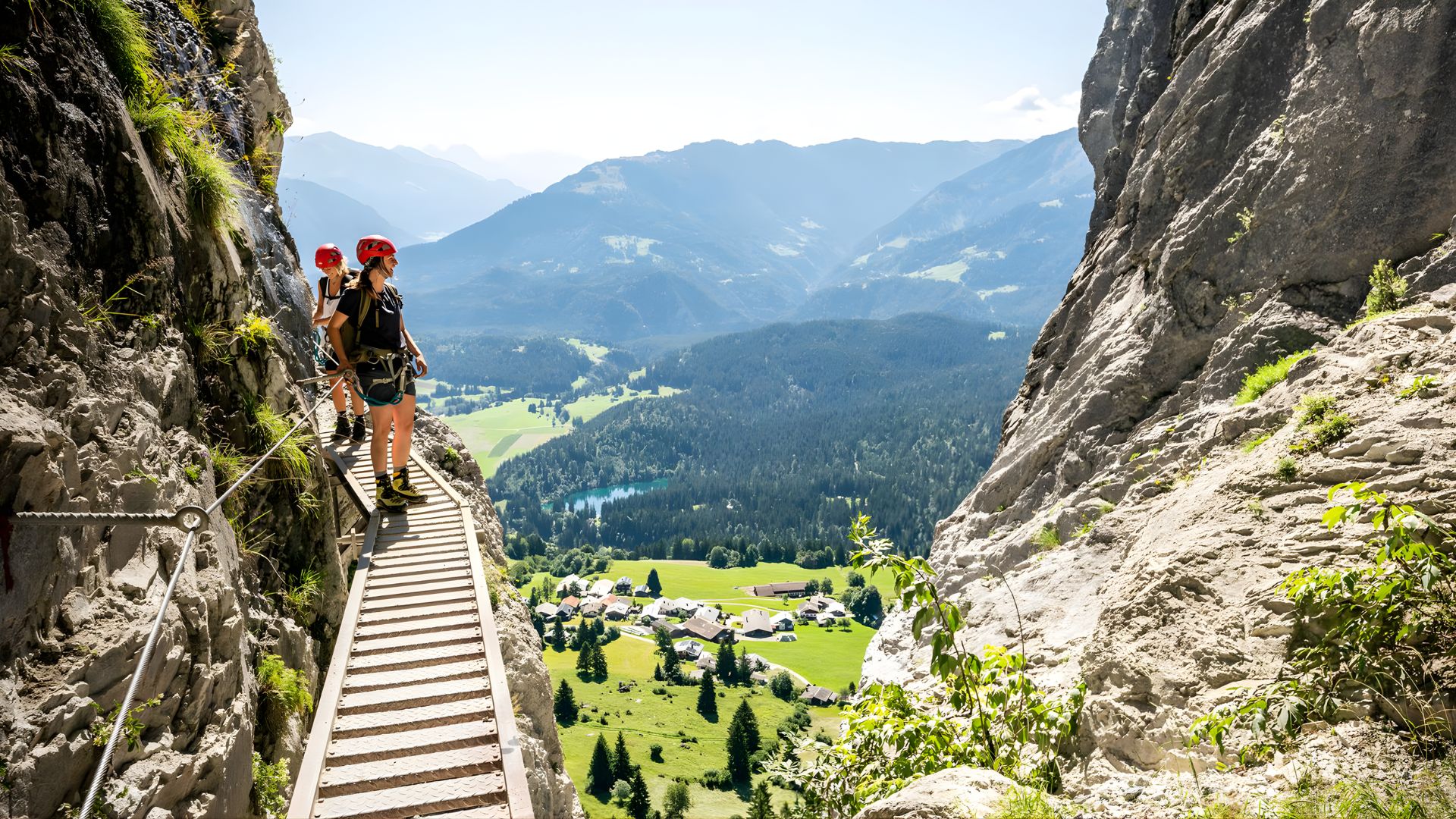
Dating back to 1739, this is Switzerland’s oldest via ferrata, featuring natural rock tunnels and 27 ladders across three vertical sections.
Route Information:
- Difficulty: K1-K2
- Duration: 2 to 3 hours
- Length: 500 meters
- Height: 1,800 meters
Getting There: From Flims, take bus route 1 to Fidaz Pinut stop, then hike 30 minutes through the forest to the cliff base below Flimserstein.
The route includes a remarkable 20-meter natural tunnel where you cross sideways on a ladder, making it ideal for beginners yet exciting enough for experienced climbers.
6. Gantrisch Via Ferrata
Source: Bern Welcome
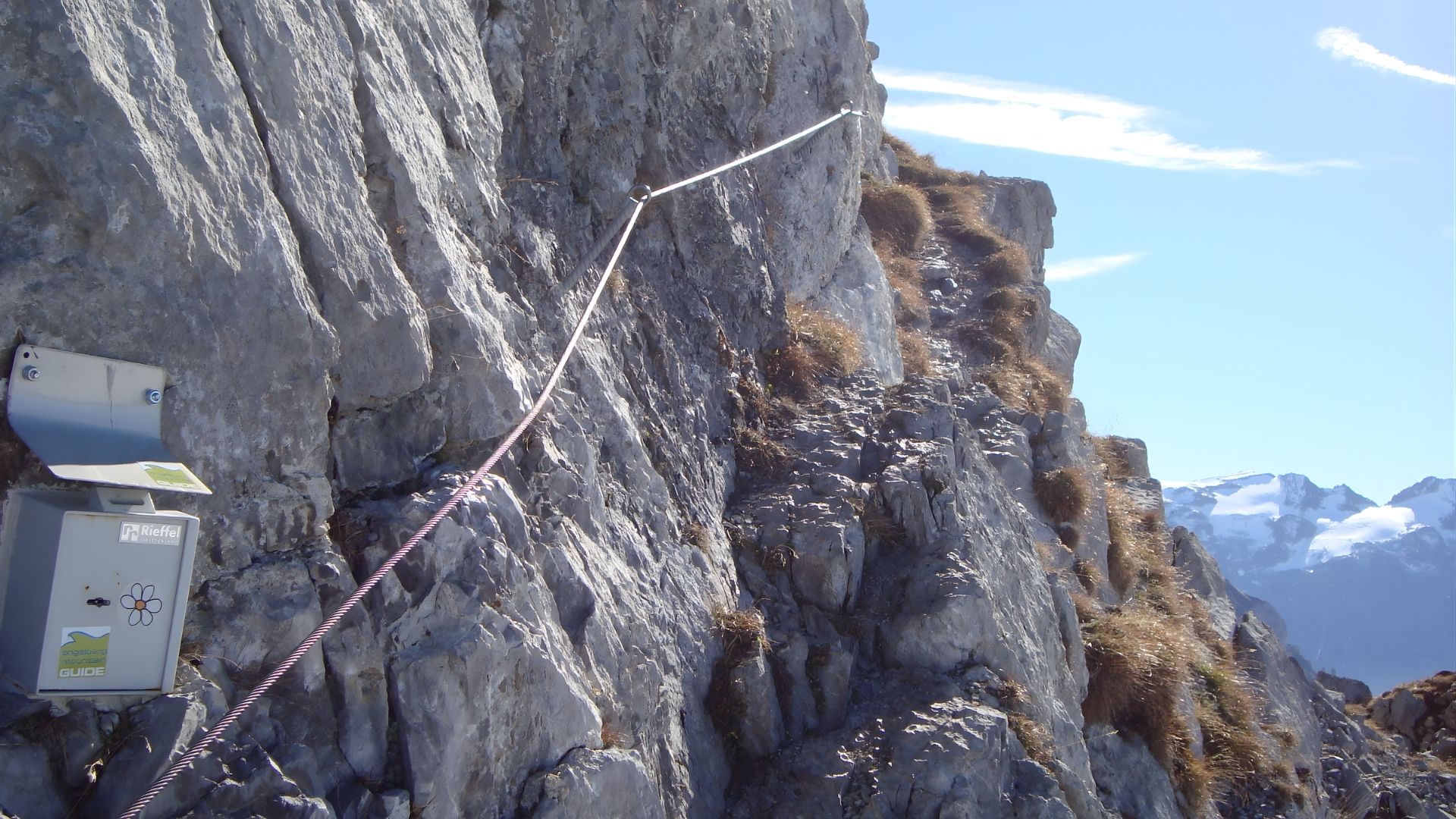
This sporty route offers challenging vertical climbs, including the Kürewändli section, and stunning panoramic views stretching from the Jura to the Bernese Alps.
Route Information:
- Difficulty: K4 (C/D)
- Duration: 3 to 4 hours
- Length: 420 meters of cable
- Height: 2,176 meters
Getting There: Park at Gurnigel Wasserscheide, then hike via Nüneneberg to Alp Obernünenen, and follow the marked path to Leiterepass, where the route begins.
The route demands fitness and strong arms as it traverses steep, overhanging sections, but the summit plateau rewards climbers with remarkable scenery across central Switzerland.
7. Belvédère Via Ferrata
Source: Nax Region
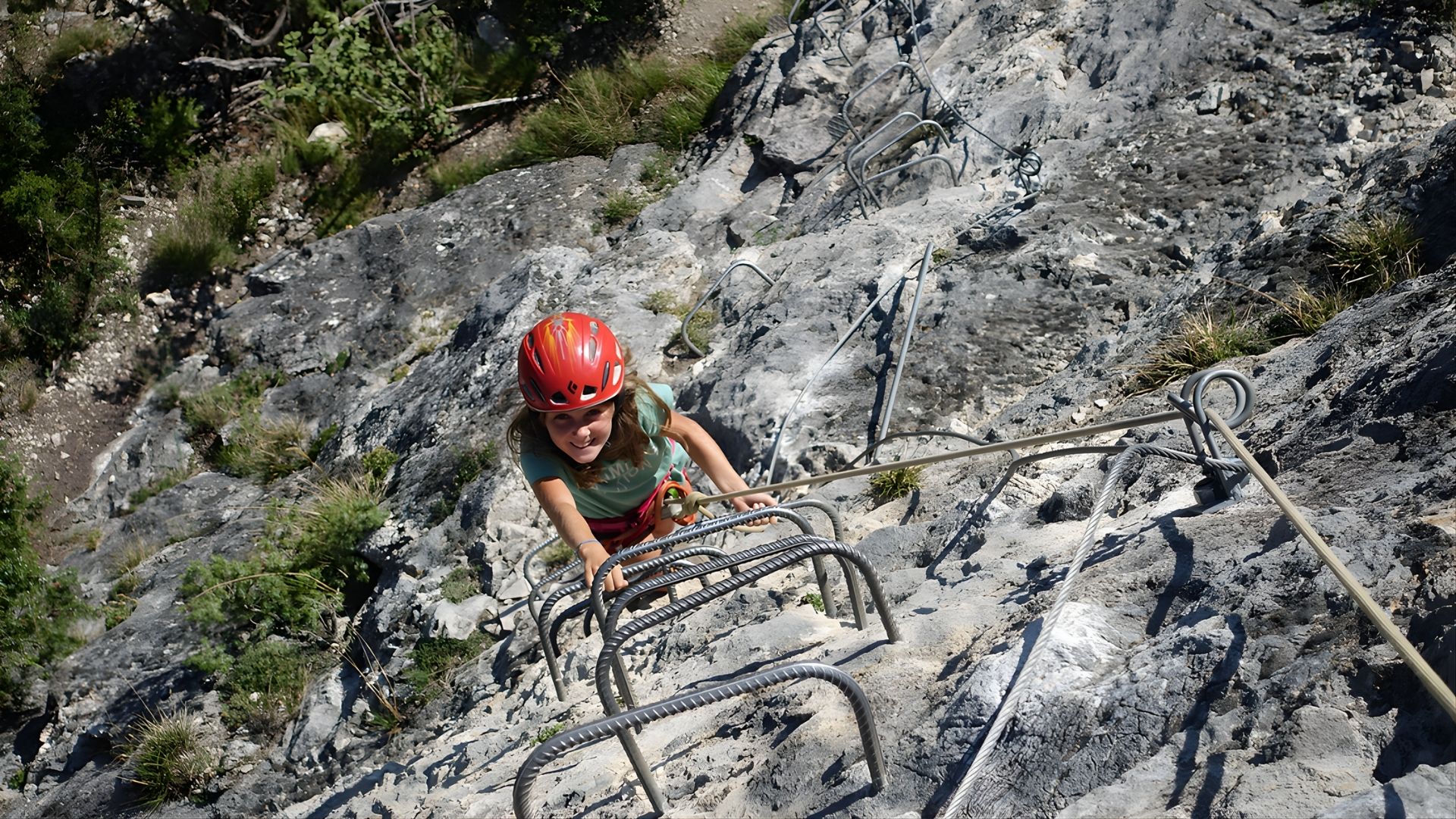
This accessible route near Sion offers two rope bridges and spectacular views over the Rhône Valley, making it perfect for first-time via ferrata climbers.
Route Information:
- Difficulty: K2 (Moderately Difficult)
- Duration: 1 to 2 hours
- Length: 1.2 kilometers
- Height: 1,220 meters
Getting There: Drive to the third hairpin on the Sion to Nax road, park at the designated area, then follow the forest path to the cliff base.
After completing the climb, walk to the Belvédère lookout point where you’ll enjoy unobstructed views of vineyards, castles, and the entire valley spread below you.
Wrapping It Up
To summarize, Switzerland provides exceptional opportunities for climbers of all skill levels to experience the Alps through protected routes.
From beginner-friendly paths to expert-level challenges, each destination offers unique characteristics worth visiting.
The combination of fixed safety systems and natural mountain terrain creates an accessible yet thrilling way to reach impressive heights.
Before you begin the climb, always check current weather conditions and confirm your equipment meets safety standards.
Ready to test your limits on these incredible Swiss mountain routes?
Share your experiences or questions in the comments below. Which route appeals to you most for your next Alpine climbing trip?