
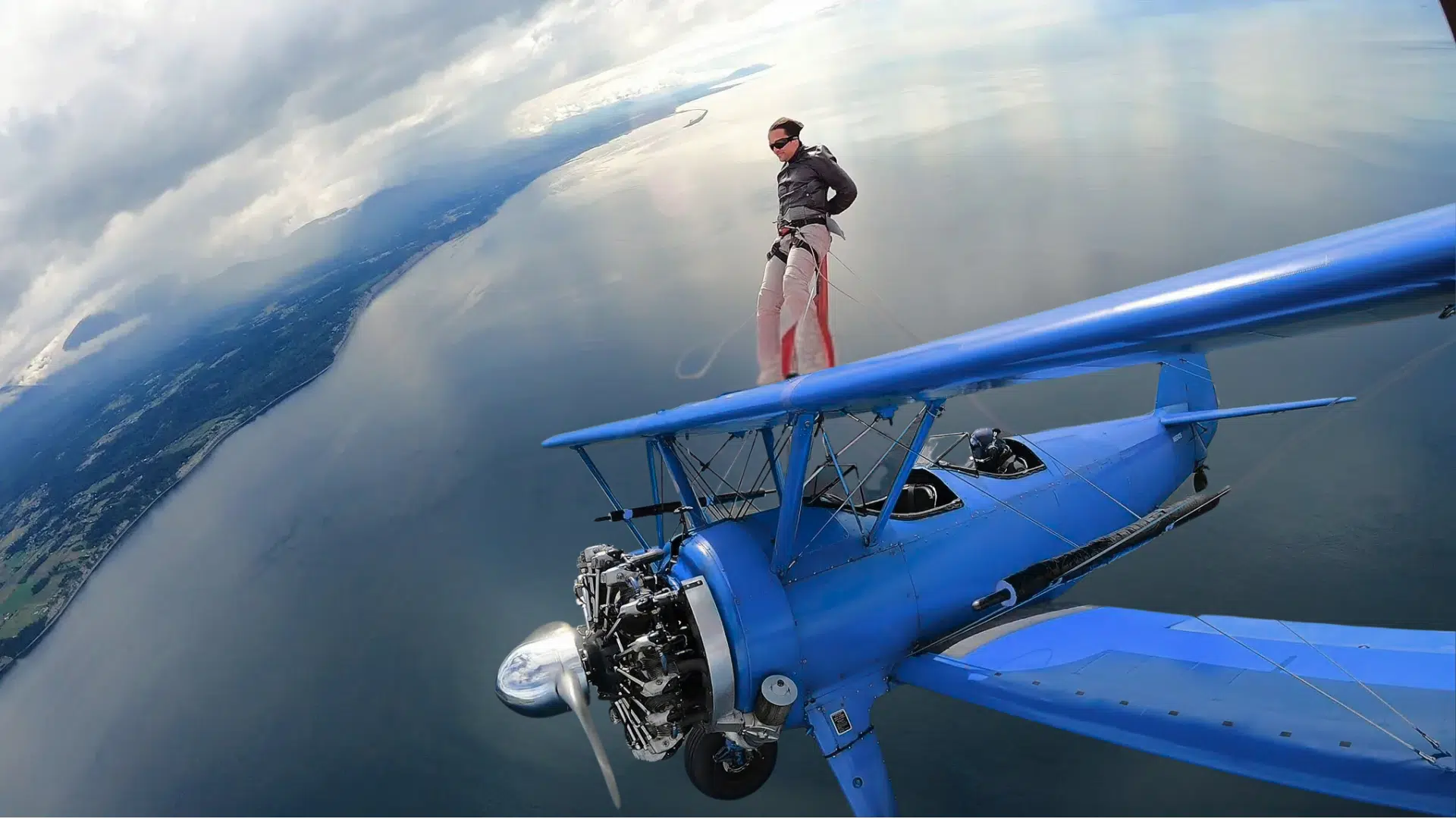
Standing on the wing of a flying airplane sounds like something from an old movie. But wing walking is real, and you can actually try it yourself.
This extreme sport lets you experience flight in the most thrilling way possible, strapped to the outside of an aircraft thousands of feet above ground.
What started as daredevil stunts in the 1920s has become a safe, structured activity for regular thrill-seekers.
You don’t need special skills or years of training. Modern wing walking combines that vintage excitement with today’s safety standards.
Ready to feel the rush of 150 mph winds while soaring through the sky? This guide covers everything you need to know about wing walking, from training and safety requirements.
What is Wing Walking?
Wing walking is an extreme sport where people stand or walk on airplane wings while the aircraft flies through the sky.
You get strapped securely to the wing’s surface as the plane soars thousands of feet above ground. This isn’t like skydiving, where you jump and fall.
Instead, you stay attached to the plane’s wing during the entire flight. What started as daredevil stunts in the 1920s has now become a real activity that thrill-seekers can book and try safely.
A Brief History of Wing Walking

Source: amusingplanet.com
Wing walking has roots that stretch back to the roaring 1920s, when aviation was young and crowds craved excitement.
1920s Barnstorming Era Daredevil pilots and performers traveled across America, putting on aerial shows. These brave performers would climb out of cockpits mid-flight and walk across wings with no safety gear. Just raw courage and the desire to entertain amazed crowds below.
Famous Daredevils, Wing walkers like Ormer Locklear, became legends for their fearless performances. These performers risked their lives doing handstands on wings and transferring between moving planes. Their death-defying acts made them household names across the country.
Today’s wing walking modernizes the activity, keeping the thrill but adding safety measures. While still a highlight at airshows, the sport now offers supervised experiences for the general public. Secure harness systems, modified aircraft, and trained pilots make today’s wing walking much safer than those early barnstorming days.
Who Can Participate in Wing Walking?
You don’t need to be a professional stunt performer to try wing walking. Regular thrill-seekers can book this experience, but operators have specific requirements to keep everyone safe.
| Requirement Category | Details | Why It Matters |
|---|---|---|
| Age Limit | Must be 18+ years old | Legal consent and physical maturity are needed |
| Physical Fitness | Good overall health is required | Need strength to handle wind forces |
| Weight Restrictions | Under 200-210 lbs (varies by aircraft) | Aircraft weight limits and harness capacity |
| Medical Conditions | No heart problems, epilepsy, or severe mobility issues | Safety during high-stress flight conditions |
| Mental Readiness | Comfortable with heights and enclosed spaces | Must handle fear and adrenaline effectively |
How to Train for Wing Walking?
Source: emmasbucketlist.com
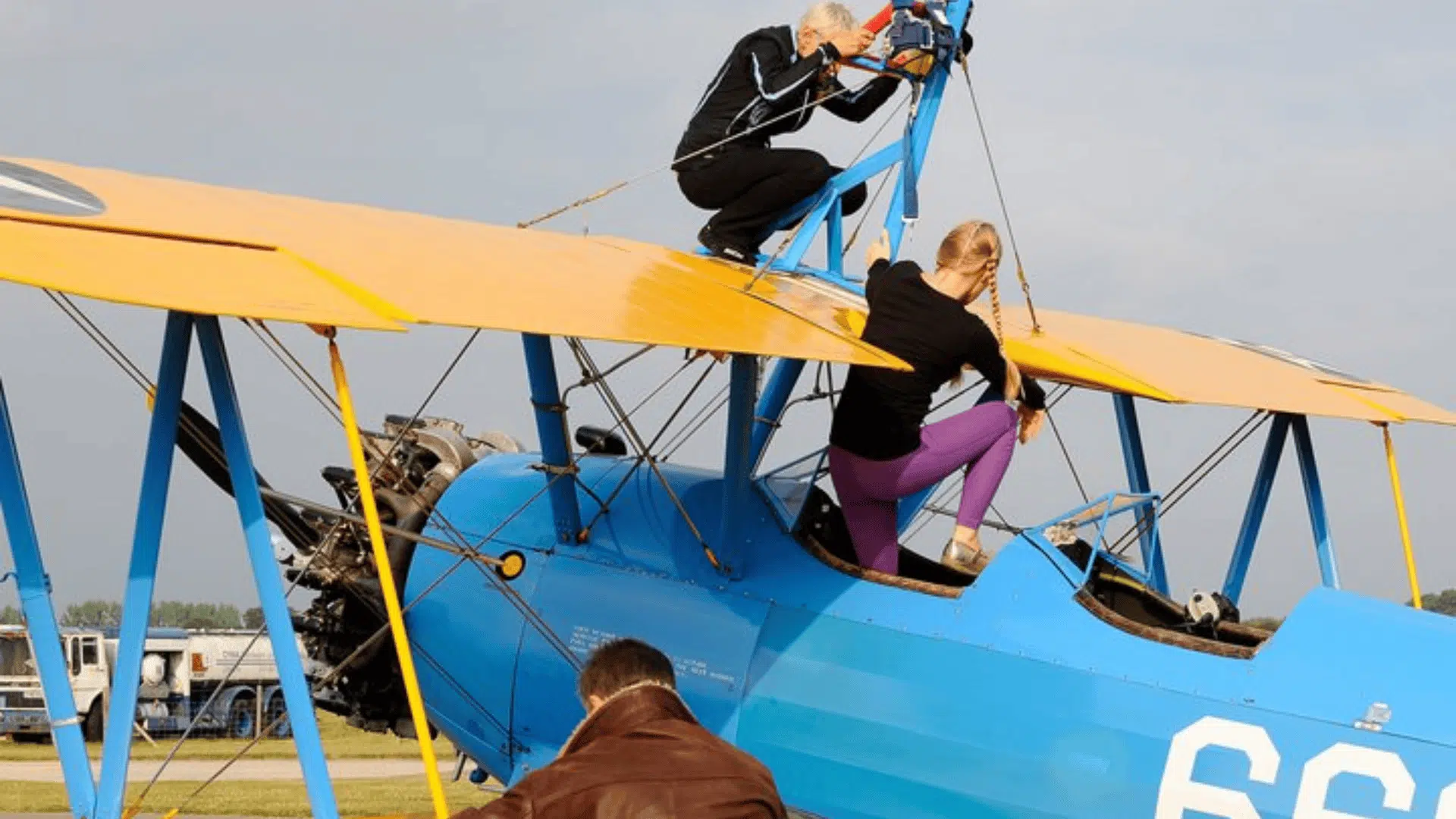
Before your first wing walking flight, you’ll go through comprehensive ground training to prepare you for the experience. Here’s what the training process involves:
1. Safety Gear & Harnessing
You’ll get fitted with a specialized harness system built specifically for wing walking. The instructors will show you how the straps work and test all connection points.
They’ll explain how the rig keeps you secure even in strong winds. You’ll practice getting in and out of the harness until it feels natural.
2. Communication Systems
Pilots and ground crew use hand signals since talking is nearly impossible during flight. You’ll learn basic signals like thumbs up for “okay” and pointing gestures for direction.
Some aircraft have intercom systems that let you hear the pilot’s voice. Clear communication keeps everyone safe and helps you enjoy the experience more.
3. Physical Preparation
Basic fitness helps you handle the physical demands of wing walking. Strong leg muscles help you maintain balance against wind forces up to 150 mph.
Good arm strength lets you hold steady positions while strapped to the wing. You don’t need athlete-level fitness, but being in decent shape makes the experience more comfortable.
4. Mental Readiness
Managing fear and nerves is a big part of wing walking preparation. Most first-timers feel terrified during takeoff but excited once they’re airborne.
Instructors teach breathing techniques to help control anxiety. They remind you that thousands of people have done this safely before you.
What to Expect in Your First Wing Walking Experience
Source: hewingwalkcompany.com
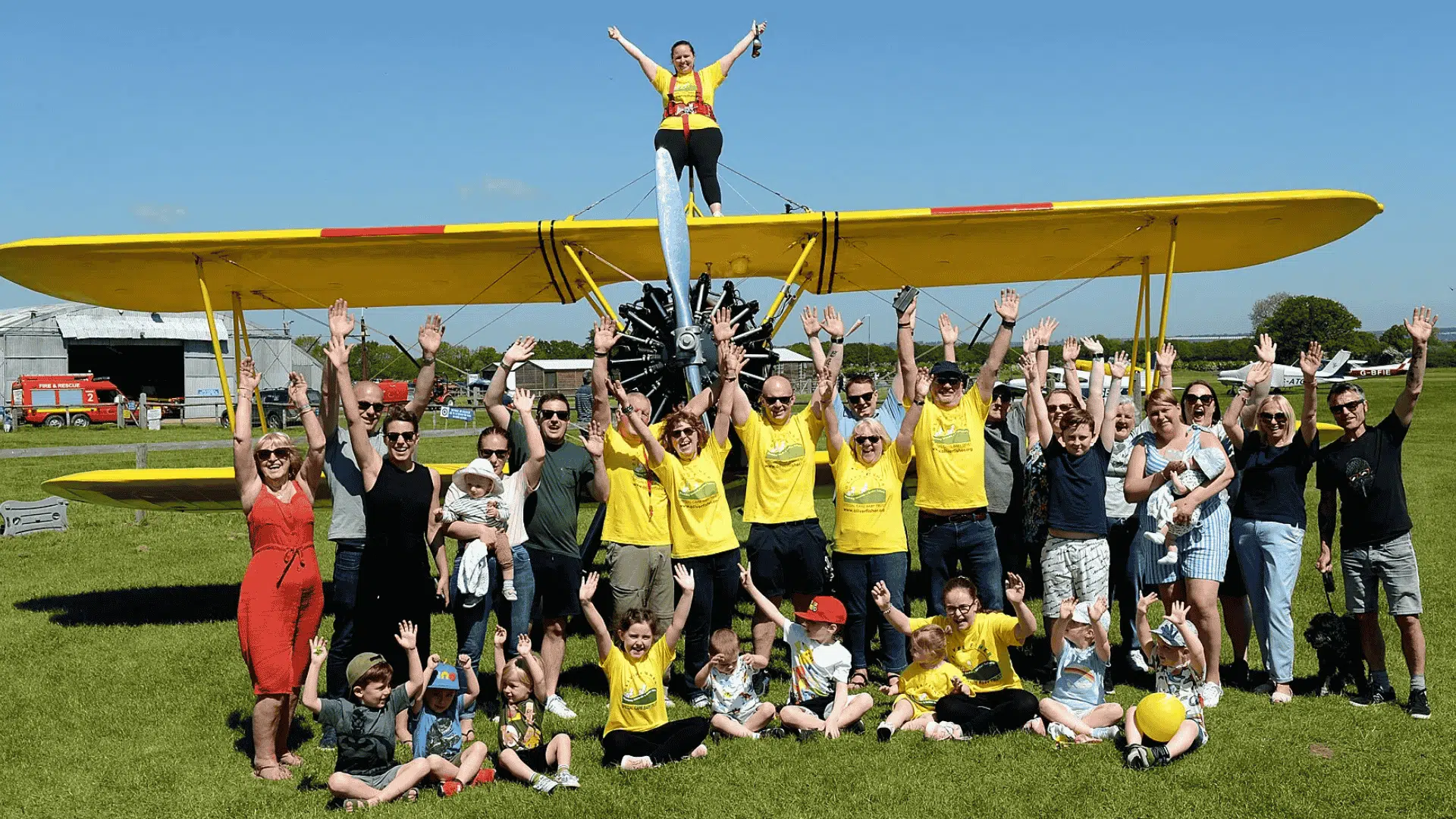
From the moment you arrive for safety training to the breathtaking rush of standing on a plane mid-air, here’s exactly what your first wing walking adventure will feel like.
- Arrival & Briefing: You’ll meet your pilot and safety team, get fitted with your custom harness, and learn essential safety signals and procedures.
- Takeoff: The aircraft accelerates down the runway with your heart pounding as you feel the wheels leave the ground beneath you.
- The Ride: You’ll experience intense wind speeds up to 150 mph while safely secured to the wing thousands of feet above ground.
- The Views: You get a spectacular bird’s-eye view of the landscape that no other activity can provide.
- Landing: After a smooth touchdown, you’ll receive a completion certificate and usually take celebratory photos to mark your achievement.
Tips for Your Wing Walking Adventure
Make the most of your once-in-a-lifetime wing walking experience with these practical tips for safety, comfort, and unforgettable memories.
- Book Early: Wing walking spots fill up fast since operators only run limited flights per day, so reserve your slot well in advance.
- Dress Appropriately: Wear fitted, comfortable clothes and closed-toe shoes that won’t slip off during the high-speed flight.
- Eat Light: Avoid heavy meals before your flight to prevent nausea from the combination of nerves and wind forces.
- Capture the Moment: Bring a secure GoPro or choose the operator’s professional photo package to document this once-in-a-lifetime experience.
- Stay Calm: Practice deep breathing techniques, and trust your safety equipment – thousands have done this safely before you.
Watching Wing Walking Performances
Want a taste of what wing walking feels like? Watch this incredible Nevner wing walking video and see the thrill up close.
Where You Can Try Wing Walking
- USA Airshows: Wing walking experiences are often tied to airshow events across America.
- Adventure Flight Schools: Specialized operators offer safe sessions for first-timers in select U.S. locations.
- UK & Europe: Home to professional wing walking schools that welcome global visitors.
|
Try Wing Walking Here |
The Bottom Line
Wing walking offers an unmatched thrill that combines history, adrenaline, and breathtaking views into one unforgettable experience.
From its daredevil roots in the 1920s to today’s safety-focused operations, this extreme sport continues to push boundaries while keeping participants secure.
You don’t need to be a professional stunt performer to try wing walking. With proper training, safety equipment, and experienced pilots, regular people can safely experience what early barnstormers risked their lives to achieve.
Whether you book through US airshow operators or travel to established European schools, wing walking delivers something truly extraordinary.
Ready to take flight? Research certified wing walking operators and book your spot early, this bucket-list experience sells out fast!